• Home
  • About
  • English
  • 中文
  • 日本語

Liminal Space: Between Self and the World

Liminal Space: Between Self and the World

Author Archives: SimonCiaccona

被封塵的香港藝術史料

28 Tuesday Jun 2016

Posted by SimonCiaccona in 中文

≈ Leave a comment

Tags

Art, Books, Hong Kong

與香港藝術對話

長話短說。

小弟正趁著有限空餘時間速讀黎明海博士主理的這兩本訪問集。剛剛看完《與香港藝術對話1980-2014》(香港:三聯. 2015),至於《與香港藝術對話1960-1979》(香港:三聯. 2014)則希望儘速解決。

以下內容,引自《與香港藝術對話1980-2014》:

—

黎[明海]:一九九六年你移民的時候,曾替香港文化博物館做了一個關於攝影的研究,訪問了五十位香港攝影師。現在那些資料都在該館,沒有公開嗎?

王[禾壁]:我自己保存了一份不太完整的資料,但錄音資料則沒有。我在加拿大期間把它們重新整理成文字。

黎:有機會把這些研究資料出版嗎?要不然真有點可惜。

王:花了差不多兩年時間,的確有點白費。這個研究還包括五十位數碼或電腦藝術家,而當時來說已經相當多,稍為活躍一點的攝影藝術家都包括在內了。我覺得電腦藝術家的資料可以整理成檔案庫,攝影藝術家則可以再認真一點去做。

那些受訪的藝術家們都很認真和熱心,他們給了我很多關於他們的資料,然後我拿去博物館那邊複印,之後再交還給他們。

(頁62)

—

黎[明海]:話說回來,大概八十年代時,你好像做過類似的研究,訪問過一百多位藝術家,並把資料存於香港文化博物館。

何[慶基]:沒錯。因為九十年代初期很多人移民外地,我們害怕有關老一輩藝術家的資料因此而散失,便展開了有關研究。坦白說,我不認為香港藝術中心有足夠資金和能力應付該項研究。做這個研究,可算是因為有高度的焦慮而已。因此我們大膽進行口述歷史,訪問一些老藝術家,做了一個很基本的研究。

黎:他們把資料藏起來,跟著不了了之?那版權雖屬?我也問過譚志成為何沒有對外公開資料,以供後續的研究人員參考。

何:後來文化博物館的嚴瑞源問我要了那批訪問,現在是屬於他們的,但是香港藝術中心好像亦留有一個副本。不過現在存於香港藝術中心的資料也不知會被丟到哪裡去了

(頁124)

—

這些重要的資料,怎可以一了了之?!

可以挽救嗎?!

有心的話,出版公開有何難處?

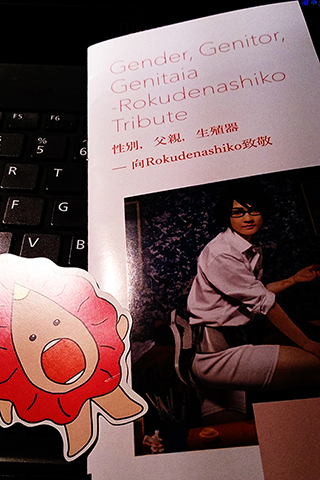
【筆記:《性別,父親,生殖器 – 向Rokudenashiko 致敬》開幕爭吵事件】

30 Sunday Aug 2015

Posted by SimonCiaccona in 中文

≈ Leave a comment

Tags

Art, Hong Kong, Japan

Rokudenashiko_small

事忙。不過若果不把事情即時記下,恐怕只會化成模糊的記憶碎片。

—

2015年8月29 日晚上六時,以爭議性日本藝術家五十嵐惠為主角的《性別,父親,生殖器 – 向Rokudenashiko 致敬》 (Gender, Genitor, Genitaia – Rokudenashiko Tribute) 展覽於香港油麻地活化廳正式開幕。本人準時到達,旋即被管理活化廳的A 認出,稍稍寒暄。其後,展覽的日籍策展人B 到場,禮貌性打招呼。「你上星期來了我的講座呢。」「其實我們2013年於小豆島碰過面了。」云云。

時間隨各國賓客們的交談和五十嵐惠的笑容流逝。忽然,一男子闊步踏入活化廳,把傳單派給賓客們。傳單圖文並茂,中英並照。中文內容如下:

「活活被強暴,然後抹去…

在 沒有經過充分知會及同意的情況下,活化廳的日常佈局被大肆轉變,部份佈置在未經同意也被拆走。在此情況下,昨晚我們三人構思一個藝術行動,於活化廳的外牆 以顏料寫上一些字句,藉以帶動策展/藝術的權力,如何在社區,及我們作為提供場地持份者的權利之間取得平衡。然而,無奈地,這些字句在完全未經知會的情況 下遭到抹去。這或由於溝通不足或一場誤會,然而也是一個機會反思,雖有權在這空間按其意志重新定義,藝術的完整性及社區的完整性,如何拿到一個平衡?我們 對此感到十分無奈,亦對這次策展所提出的有關女性主義、暴力、父權等思考,及如此處理手法,感到十分矛盾,對於牆上字句及活化廳相關陳設在未經同意也被清 除感到十分痛心。」

不久,B滿臉不悅的把我手中的傳單拿走。又過了不久,男子再次出現,戲劇 性地在賓客和五十嵐惠面前跟B爭吵起來。我聽見的,男子多次以「violence」痛斥B 的所作所為,而B則「misunderstanding」及「 You haven’t told me you will do this」作回應。A則時而以廣東話安撫賓客,「溝通啫,溝通啫。」

事後,B 跟賓客們談論交代,不無淚光。而我在活化廳逗留約一小時後離開。除了跟B 和另一居港日本友人道別,不忘向站在街角的A,取閱那被B拿走的傳單,並留作紀錄。

—

我 是很同情B的。不過,她既要把活化廳「暫時」變成 white cube,不可能不明白 white cube 本身的政治性。另外,關於art intervention的前世今生 ,她應當很熟悉才是。最後,活化廳的一事一物所背負的整個社區及文化脈絡,本人未經訪問不知道她有多瞭解了。

至於男子的「藝術行動」的正當性,還是留給藝評人處理吧。

傳統與創新:山出保前市長的金澤21世紀美術館

07 Friday Feb 2014

Posted by SimonCiaccona in 中文

≈ Leave a comment

Tags

Art, Books, Hong Kong, Japan

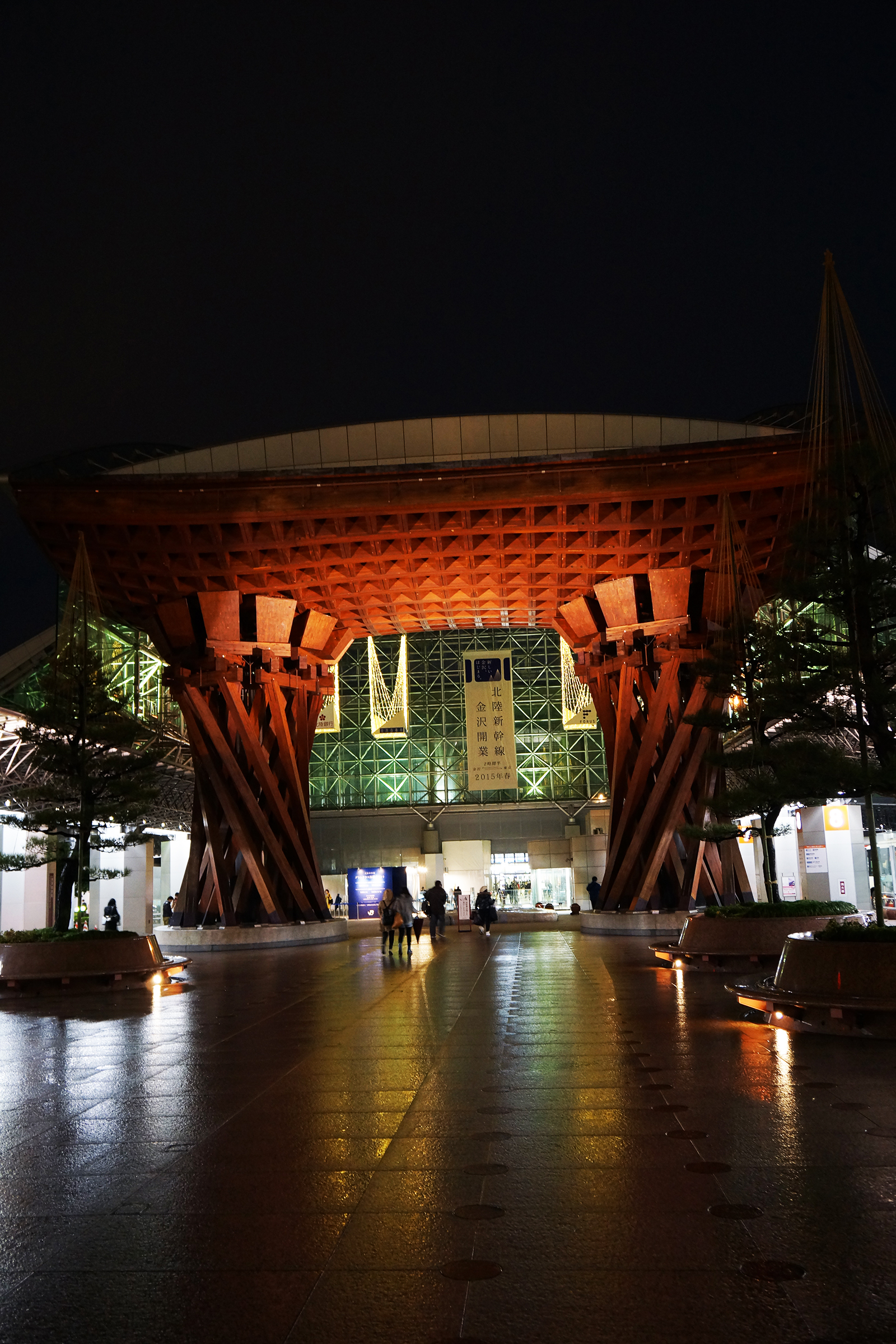
--- 金澤車站:歷史與現代的結合

金澤車站:歷史與現代的結合

剛剛在書本中讀到前金澤市長山出保先生的訪談,訪問者為身兼日本多個藝術節總監的北川フラム (Fram Kitagawa  ;台灣人譯作北川富朗。我討厭把片假名作音譯,寧願寫英文,或只寫姓氏)。北川主持的訪談,內容當然與藝術相關。

位於北陸石川縣的金澤,是日本知名的古城。市內不但有全國三名園之一的兼六園等歷史「硬件」景觀,更設法保留了各種地方傳統工藝的傳承。簡言之,是形象品味極為守舊的地方。然而,在山出保主政下的2004年,與兼六園只有也一街之隔的金澤21世紀美術館正式開幕。古都的中心,妹島和世+西沢立衛/SANAA事務所的當代建築,明目張膽的當代美術館。山出前市長,究竟怎麼想的?

據稱,當初決定設館理由,頗為直接:因為當時金澤還未有市立美術館。但如果設立以傳統藝術為主題的市立美術館的話, 則與就在不遠處的石川縣立美術館重疊了。那,就毅然蓋一間悅目的當代美術館好了。(他沒提到的,是日本全國的當代美術館熱潮。) 然而,最要令我印象深刻的,是山出先生對「傳統」的解讀 —

「…一般來說,傳統就是把同樣事情不斷重複罷。但是,我認為這不過是傳承,而非傳統。傳統與傳承是不一樣的。雖然把事物照辦煮碗的繼襲也算樂事,但是沒加入新元素的傳統其實並不足以成為傳統。那是大岡信先生 (註:詩人、評論家) 的字句告訴我的……大岡先生的文章中,引起我注意的是:『嚴格來說,所謂傳統是與創意相連的。如果這必須的創意枯竭了的時候,這一門傳統則以此為限而死掉。藝術、文字、音樂皆如此。這是所有表現行為的歷史,赤裸裸的事實。』……」

如是者,山出前市長抱著「與市民緊密連接的當代美術館」這目標,請來今天紅遍國際的妹島和世+西沢立衛/SANAA事務所打造高度透明感、與民共樂的建築 (他們憑此得到威尼斯建築雙年展的金獅子獎),並把自己的官位命運押在美術館未知的成功上…… 誠然,要評價美術館的成功與否,好不容易。論它對金澤市民的正面影響,那須要嚴謹的人類學田野考察式驗證。論藝術,關注日本當代藝術的法國社會學家Adrian Favell批評,美術館當年的首任策展人長谷川祐子,眼中只有國際,沒有日本。然而,山出前市長證明了最起碼的事情:驚人的入場數字讓他的官位安然度過各方的質疑。他的冒險,得到認同了。

—

金澤的例子,也讓我想起香港。對,我們要保護歷史,保留舊建築。另一方面,如果真的要設置新建築的話,其設計可不可以大膽一點、前瞻一點、空間運用親民一點?記得以前 Lonely Planet 的香港旅遊書,總會有專門篇章介紹香港的當代建築,那是昔日的光輝歲月,不知現在還有沒有。當然,香港仍然不乏新建築,不過似乎都是冰冷的、隔絕的、消費性的、一式一樣的…… 最讓我最遺憾的,是主題公園仿古式 (我心想寫的是「simulacrum式」) 建築,以中環新天星碼頭為最佳例子…… 舊的保留不了,又沒勇氣拿出新設計,只是「仿古」作假,想點?

新舊建築的碰撞結合,是世界各大城市面對的挑戰。個別城市的建築地貌,則反映出城市官員與市民的智慧與藝術品味。山出保足足經過五次選舉洗禮,當了二十年市長,這又反映了甚麼呢?

—

北川フラム 『アートの地殻変動―大転換期、日本の「美術・文化・社会」』 東京:美術出版社.2013

Favell, Adrian. Before and After Superflat: A Short History of Japanese Contemporary Art 1990 – 2011. Hong Kong: Blue Kingfisher. 2011.

村上春樹《與小澤征爾先生談音樂》

03 Monday Feb 2014

Posted by SimonCiaccona in 中文

≈ Leave a comment

Tags

Books, Japan, Music

新潮社: http://www.shinchosha.co.jp/wadainohon/353428/

這本小澤征爾X村上春樹的對話集,標題大可直譯為 《與小澤征爾先生談音樂》。顧名思義,這是指揮大師與小說家談音樂經的紀錄。日文版出版於2011年11月30日,而我大概是2012年春節到東京旅行時買的吧。這是我第一本從頭到尾讀完的日文書。

記得當年跟樂評編輯談及此書,他說:「不如你寫書評吧,我幫你刊登。」 最後,我不了了之。
兩年後的今天,回想此書,書中細節日漸淡忘,但當時讀後感覺則記憶猶新:「村上春樹,可以當樂評人呢!」有此感覺,是因為作為樂迷的村上,不但擁有可以跟小澤對應的豐富知識,而且他的音樂賞析非常仔細,並不流於「整體感覺」的空泛描述。關於此,我是慚愧的。當然,自稱不諳五線譜、無音樂根底的村上,跟小澤一起讀譜討論、與大師一起到音樂營旁聽室樂練習,再以小說家的功夫作文字呈現,讀起來實在有趣無比。文字藝術,其實也是樂評人要思考的。

小澤呢,則透露了很多有趣往事。譬如說,Igor Stravinsky 曾經想把《春之祭》改版、讓節奏簡化,因為作曲家本人不懂得指揮自己的作品……云云。

好了,為甚麼兩年前我把編輯的書評提議不了了之?其實,當時我心想:在中文刊物評一本只有日文版的書,很奇怪吧?既然是村上春樹,中文版總有一天面世的。最後呢?那本2013年的《沒有色彩的多崎作和他的巡禮之年》,日本出版後不到半年,賴明珠的中文版便上市了。至於小澤征爾X村上春樹的對話集,如果出版社因市場考慮而放棄譯本的話,恐怕要留待各位自行學習日語再研讀了……

Something about Chigo… and beyond

02 Sunday Feb 2014

Posted by SimonCiaccona in English

≈ Leave a comment

Tags

Japan, Studies

from Tōji Scroll, Tengu Zōshi (1296)

from Tōji Scroll, Tengu Zōshi (1296)

Unexpectedly,  this semester I’ve dealt with the topic of chigo (稚児).  What is chigo? Here’s a paragraph from the term paper I’ve just submitted:

In Medieval Japan, chigo was legitimized as a sexual object in religious institutions.  “According to the Chigo kanjō shiki, the purpose of this abhiṣeka (Buddhist anointment) ritual is to introduce the chigo into the compassionate realm of Kannon and to achieve his identification with this bodhisattva, through his becoming a ‘ideal chigo […]  As we recall, having sex with an avatar of Kannon transmutes desire into deliverance, whereas having sex with an uninitiated chigo, a profane body, will cause one to fall into the three evils destinies[…]   [T]he chigo whom the priest rapes is at the same time a potential savior, and the priest rapes him while worshipping him as an avatar and a double of the emperor.” (Faure 1998: 261)  Not surprisingly, chigo as sex objects also appear as the heroes of love stories in medieval tales.  Paul S. Atkins, referring to several titles of these tales collectively grouped as Chigo monogatari, introduces the narratives as such:  “In most (but not all) of the stories, a monk falls in love with a chigo, and typically the results are disastrous.  Tales in which a monk falls in love with a woman tend to take on a comic tone, but when the beloved is a chigo, the tale often ends tragically.  The chigo may be kidnapped, falsely accused, or attacked. Others may attempt to kill him, or he may actually be slain. Perhaps the chigo dies of lovesickness, but he is just as likely to drown himself or to trick others into murdering him.  After death, it may be claimed that the chigo was the avatar of a god or bodhisattva.” (2008: 952)  For the last aspect, Bernard Faure, referring to Margaret Childs, compares the story of Aki no yo no monogatari – recognized as “representative of the genre” (1998: 242) – and Chigo Kannon engi. The former, a story filled with tragic love, rivalry between temples, deaths, and destruction, turns out be a “upāya of the bodhisattva Kannon to bring about the monk’s salvation” (ibid.); for the latter, “the bodhisattva Kannon appears as a young novice to reward the devotion of a monk and bring him salvation” (ibid.) Here, sex is recognized as a reward instead of a upāya.  “According to Childs, this text suggests a kind of sanctification of homosexual relationships within the Buddhist community.” (ibid.) 

As one may expect, I have had to read all those medieval Japanese tales and scholarly literature on the topic of homosexual love between children and monks.  It would have been an extremely hard time for me if it weren’t about something Medieval – something you may speculate or interpret, yet nothing can really be proved.  Imagine: what if the practice really exists today?

I’ve no problem with homosexuality.  Rather, I’m against all sorts of religiously-sanctioned wrongdoing.  In this case, it is pedophilism.  Buddhist  pedophilism – too unrealistic, huh?  Right, that was something in the Kamakura period, which is unimaginable nowadays.  How’s about Catholic pedophilism in the 21st Century?  No, that’s not religiously legitimized, yet I am very curious if there would be any “esoteric explanation” among the priests to justify the behaviors.  We never know…

Talking about “religiously-sanctioned wrongdoing”, pedophilism looks archaic.  Meanwhile, how’s about…
– To wage a war in the name of X;

– Not to let women travel alone in the name of X;

– To discriminate some particular others because their existences are not allowed according to “the book”… etc.

Killing.  Raping. Bullying. Discriminating.  These can’t be resolved simply by cultural relativism.  There must be a law, an absolute law, to protect the rights of *all individuals*.  This law must be secular in itself.  This is the law of universal human rights.

I don’t know how come I think of these contemporary issues while talking about medieval chigo. Hmm… Maybe, that’s because of my own belief that any knowledge produced should be used for the betterment of people’s lives.  I just can’t stop thinking about real people of our time, real problems of our time.  Could it be destiny that I’ll never be a historian (or, an art historian)?  Never mind.

I just hope that religious pedophilism doesn’t exist.  Neither the secular one.

—

Atkins, Paul S. “Chigo in the Medieval Japanese Imagination” in The Journal of Asian Studies. Vol.67(3). Aug 2008. pp. 947-970.

Faure, Bernard. The Red Thread: Buddhist Approaches to Sexuality. Princeton, N.J.: Princeton University Press. 1988.

Subscribe

  • Entries (RSS)
  • Comments (RSS)

Archives

  • June 2016
  • August 2015
  • February 2014

Categories

  • English
  • 中文

Meta

  • Create account
  • Log in

Create a free website or blog at WordPress.com.

Privacy & Cookies: This site uses cookies. By continuing to use this website, you agree to their use.
To find out more, including how to control cookies, see here: Cookie Policy
  • Subscribe Subscribed
    • Liminal Space: Between Self and the World
    • Already have a WordPress.com account? Log in now.
    • Liminal Space: Between Self and the World
    • Subscribe Subscribed
    • Sign up
    • Log in
    • Report this content
    • View site in Reader
    • Manage subscriptions
    • Collapse this bar
 

Loading Comments...